LOS ANGELES, May 7, 2026 /PRNewswire/ -- TCL CSOT, a global leader in advanced display technologies and a subsidiary of TCL Technology, is demonstrating how XR innovation can expand imagination and redefine interaction at SID Display Week 2026. This focus reflects the company's APEX philosophy, with its pillar of X‑Unlimited Imaginative Potential — exploring future‑oriented display forms designed to enrich human experience.
"XR devices are driving the next revolution in human-machine interaction," said Zhifu Li, VP of TCL CSOT, GM of XR BU of TCL CSOT. "Within an ultra-compact 0.28-inch form factor, TCL CSOT has achieved a retina-level pixel density of 5131PPI. Powered by full-color silicon-based Micro LED technology, we have set a new benchmark for next-generation lightweight, high-performance displays, creating a true 'smart window' into immersive digital experiences for AR and AI glasses."
Retina‑Level Clarity for AR and VR
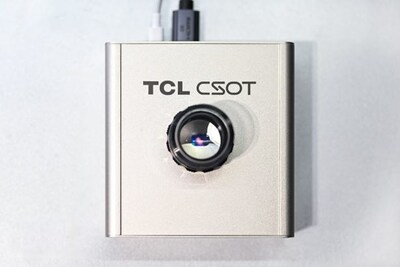
TCL CSOT's World's Highest PPI Single-Chip Full-Color Si-Micro LED Display (0.28") sets a new milestone in ultra‑compact display technology. Built on a silicon substrate with monolithic full‑color Micro LED integration, this 0.28‑inch panel achieves a resolution of 1280×720 and an unprecedented pixel density of 5131PPI, delivering razor‑sharp visuals with no visible pixilation.
Leveraging the self‑emissive advantages of Micro LED, the display offers high brightness, deep contrast, and a wide color gamut, creating a "retina‑level" experience for near‑eye applications such as AR glasses and ultra‑thin VR devices. With its miniaturized form factor, ultra‑high resolution, and low power consumption, this innovation establishes a new benchmark for lightweight, high‑performance display solutions and marks a significant leap forward in micro‑display applications.
Immersive Fidelity for Next Gen XR
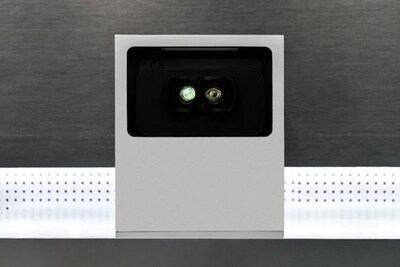
To advance ultra‑high‑definition XR experiences, TCL CSOT has introduced the World's Highest 1700PPI Real RGB G-OLED Display (2.24"). Built on glass‑based OLED architecture, it achieves 1700PPI density and 2600×2784 real RGB resolution, delivering images of exceptional sharpness and fidelity.
With a 1M:1 contrast ratio and 120Hz refresh rate, the display ensures fluid motion and vivid detail, enhanced by OLED's inherent advantages — microsecond response time, deep contrast, and low power consumption. This innovation not only elevates XR experiences but also extends its impact through ultra‑high‑density circuit technology adaptable to premium consumer electronics and industrial applications, unlocking vast market potential for XR.
Expanding the XR Portfolio
These pioneering XR displays are part of a broader portfolio TCL CSOT is showcasing at SID Display Week 2026. Underscoring its leadership across immersive display technologies, TCL CSOT is also presenting a diverse range of other XR innovations. These include the World's Highest-Res Single-Chip Multi-Color Si-Micro LED Display (0.28"), the World's Highest 2200PPI LCD XR Display (2.48") and World's Highest MP 1512PPI XR Display Paired With Cockpit (3.59"). Together, these breakthroughs highlight TCL CSOT's ability to redefine performance standards and shape the future of XR experiences.
Anchored in its human-centric APEX philosophy, TCL CSOT is ensuring that XR innovation is not only technologically advanced but also meaningful, accessible, and designed to enrich human imagination across all future applications.
About TCL CSOT
Established in 2009, TCL China Star Optoelectronics Technology Co., Ltd. (TCL CSOT) is a leading global innovator in display technologies. Its LCD, OLED, and MLED solutions power applications across TVs, smartphones, tablets, laptops, monitors, automotive systems, VR/XR, and commercial displays. With a clear strategic direction set by its advanced display technology brand APEX, TCL CSOT invests continuously and strategically in R&D, driven by a mission to amaze, protect and inspire all people through endlessly innovative display technology. As part of TCL's Worldwide Olympic Partnership, TCL CSOT is proud to deliver display solutions that elevate experiences on the global stage.
Photo - https://mma.prnewswire.com/media/2974625/WhatsApp__1.jpg
Photo - https://mma.prnewswire.com/media/2974626/WhatsApp___2.jpg
 View original content:https://www.prnewswire.co.uk/news-releases/tcl-csot-showcases-limitless-breakthrough-xr-displays-at-sid-display-week-2026-302765390.html

Silicon Saxony schärft sein Profil als europäischer Technologiestandort – und setzt dabei zunehmend auf hochspezialisierte Anwendungen. Mit dem Zukunftscluster SEMECO (Secure Medical Microsystems and Communications) startet in Dresden die zweite Förderphase für medizinische Halbleiter, während die sächsische Halbleiter- und Softwarebranche trotz schwacher Konjunktur weiter Beschäftigung aufbaut. Branchenangaben zufolge ist die Zahl der Jobs in diesem Ökosystem binnen eines Jahres um 1.500 auf rund 82.500 zum Stichtag 30. September 2025 gestiegen, ein Plus von knapp zwei Prozent gegenüber dem Vorjahr.
SEMECO entwickelt medizinische Halbleiter als Schlüsseltechnologie für sichere, vernetzte und intelligente Medizintechnik. Für die kommenden drei Jahre erhält der Cluster im Rahmen der Clusters4Future-Initiative des Bundesministeriums für Bildung und Forschung (BMBF) bis zu 15 Millionen Euro Fördermittel. Der Freistaat Sachsen begleitet das Bündnis seit Beginn und unterstützt zusätzliche regionale Forschungs- und Entwicklungsprojekte über die EFRE-Technologieförderung 2021 bis 2027. Seine aktuellen Entwicklungen präsentiert SEMECO auf den Silicon Saxony Days, die vom 15. bis 17. Juni 2026 in Dresden stattfinden sollen.
In der zweiten Förderphase richtet SEMECO den Fokus stärker auf standardisierbare medizinische Halbleiterplattformen und deren Transfer in industrielle und klinische Anwendungen. Die spezialisierten Mikrosysteme bündeln Sensorik, Datenverarbeitung, sichere Kommunikation und KI-gestützte Funktionen, zugeschnitten auf Anforderungen der Medizintechnik. Auf Basis eines modularen Plattformansatzes entstehen kombinierbare Halbleiter-, Elektronik- und Softwarekomponenten, die sich sicher integrieren und schrittweise weiterentwickeln lassen. KI-gestützte Methoden sollen zudem Zertifizierung und Zulassung unterstützen und damit den Technologietransfer in die medizinische Praxis beschleunigen – von tragbaren Ultraschallgeräten und intelligenten Vitaldatensensoren bis zu Kommunikationsimplantaten für Menschen mit eingeschränktem Hör- und Sprachvermögen.
Parallel dazu sieht der Branchenverband Silicon Saxony den gesamten Standort vor einer neuen Wachstumsphase. Das jüngste Beschäftigungsplus verteilt sich nach Verbandsangaben nahezu gleichmäßig auf Halbleiterindustrie und Softwarebranche. Die Investitionen der vergangenen Jahre entfalteten zunehmend Wirkung, sagte Frank Schönefeld, Vorsitzender des Präsidiums von Silicon Saxony. Vor dem Hintergrund der gesamtwirtschaftlich schwachen Lage unterstreiche die Entwicklung die langfristige Attraktivität des Standorts. Entlang der gesamten Wertschöpfungskette – von großen Fabrikprojekten bis zu mittelständischen Zulieferern für Reinraum- und Fabrikinfrastruktur, Spezialgase, Chemikalienversorgung und Messtechnik – rechnet der Cluster mit zusätzlichen Impulsen durch Künstliche Intelligenz, Digitalisierung und technologische Souveränität. Die Prognose von mehr als 100.000 Beschäftigten bis zum Ende des Jahrzehnts bleibt aus Sicht des Verbands unverändert bestehen.