SHANGHAI, May 12, 2026 /PRNewswire/ -- JinkoSolar, the global leading PV and ESS supplier, recently officially signed a strategic supply agreement for 2GW high-efficiency PV modules with Masdar, a global clean energy leader. Under the agreement, JinkoSolar will supply its high-performance Tiger Neo series modules for RTC, the world's first gigascale round-the-clock renewable energy project in Abu Dhabi, ensuring stable and efficient clean power output with premium product strength. The powerful partnership between the two sides will jointly build a new global zero-carbon energy benchmark.
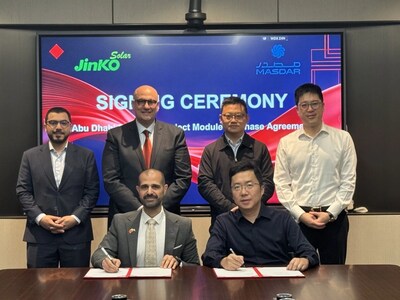
The signing ceremony was witnessed by core senior executives from both parties, including Mohamed Jameel Al Ramahi, CEO of Masdar; Jad Abdel Rahim Masri, Senior Director of Group Supply Chain and Procurement and Manager of Masdar; Abdulla Zayed, Director of Business and Project Development, Masdar; as well as Charlie Cao, CEO of JinkoSolar; Gener Miao, CMO of JinkoSolar; and Robin Li, General Manager of the MEA Sales Centre of JinkoSolar. This cooperation fully reflects Masdar's high recognition of JinkoSolar's product quality, delivery capability and global localized service system, and further proves that JinkoSolar Tiger Neo modules have become the preferred core product for the world's top large-scale new energy projects.
Located in Abu Dhabi, RTC is the world's first gigascale renewable energy project integrating solar power and battery energy storage. Jointly developed by Masdar and the Emirates Water and Electricity Company (EWEC), the project integrates a 5.2GW solar photovoltaic (PV) plant with a 19 gigawatt-hour (GWh) battery energy storage system (BESS), the largest and most technologically advanced system of its kind in the world.
RTC reimagines the potential of renewable energy by overcoming intermittency. Once operational, the project will produce gigascale baseload energy at a globally competitive rate for the first time, setting a new international benchmark and reaffirming the UAE's position in renewable energy development. The project will act as a blueprint that can be replicated internationally to meet the growing demand for clean, secure, round-the-clock power.
The Tiger Neo modules supplied by JinkoSolar fully comply with the technical standards for specialized modules tailored for the project scenarios, upgraded based on the mature and advanced N-type TOPCon technology platform.
The successful signing of the 2GW module purchase agreement marks an important milestone for JinkoSolar's deep development in the high-end Middle Eastern new energy market and the long-term strategic partnership with Masdar. Moving forward, JinkoSolar will fully support the efficient construction and advancement of RTC through high-quality product delivery and localized technical services. JinkoSolar will continue empowering the implementation of large-scale global new energy supporting zero-carbon projects with top-tier PV products and accelerate the high-quality green and low-carbon energy transformation together with global partners.
Photo - https://mma.prnewswire.com/media/2977916/JinkoSolar_Masdar.jpg
 View original content:https://www.prnewswire.co.uk/news-releases/jinkosolar-and-masdar-sign-2gw-tiger-neo-module-purchase-agreement-to-support-abu-dhabis-world-first-rtc-project-302769410.html

Apotheken in Deutschland erhalten deutlich mehr Handlungsspielraum: Der Bundesrat hat eine Reform der schwarz-roten Koalition passieren lassen, die die Rolle der Offizinen im Gesundheitswesen spürbar aufwertet. Ziel ist es, die wohnortnahe Versorgung zu stärken, Wartezeiten in Arztpraxen zu reduzieren und Prävention sowie Früherkennung auszubauen. Das Paket war zuvor bereits vom Bundestag beschlossen worden.
Kern der Reform ist ein erweitertes Leistungsangebot in Apotheken. Künftig sollen dort zusätzliche Vorsorge- und Früherkennungsuntersuchungen möglich sein, etwa zu Herz-Kreislauf-Erkrankungen, Diabetes oder Angeboten rund um das Rauchen. Apotheken können damit stärker als bisher in der Prävention ansetzen und Risiken identifizieren, bevor es zu manifesten Erkrankungen kommt.
Auch im Impfbereich werden die Kompetenzen ausgeweitet. Neben den bereits etablierten Grippe- und Corona-Impfungen dürfen Apotheken künftig alle Schutzimpfungen mit sogenannten Totimpfstoffen anbieten, darunter etwa Tetanus. Ergänzend werden Blutabnahmen erlaubt, etwa um Medikamentenwirkungen zu kontrollieren. Damit rücken Apotheken näher an klassische ärztliche Tätigkeitsfelder heran, ohne diese vollständig zu ersetzen.
Besonders sensibel ist die neue Möglichkeit, in eng begrenzten Fällen verschreibungspflichtige Medikamente ohne ärztliche Verordnung abzugeben. Erlaubt ist künftig die einmalige Ausgabe der kleinsten Packungsgröße auf Selbstzahlerbasis, wenn ein Arzneimittel seit längerem eingenommen wird und die Fortführung der Therapie keinen Aufschub erlaubt. Die Regelung soll Versorgungslücken schließen, etwa wenn ein Rezept nicht rechtzeitig vorliegt, und bleibt zugleich strikt begrenzt, um Missbrauch zu vermeiden.