HONG KONG, June 12, 2026 /PRNewswire/ -- As global air cargo hubs confront rising e-commerce demand, labour shortages, and decarbonisation targets, Westwell—a global AI company advancing smart and green container logistics—is applying its "AI + New Energy (Ainergy)" strategy to airport operations. Serving over 200 customers across 30+ economies, Westwell now brings its AI-Native capabilities to air cargo, seaport, rail, land transport, and smart factories.
At the core is a dual-AI architecture: Physical AI enables frontline autonomous execution, while Operational AI drives intelligent decision-making.
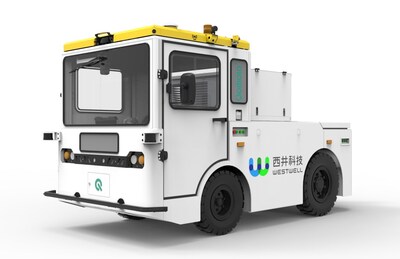
Designed for demanding airside conditions, Westwell's Q-Tractor is powered by the self-developed Q-Pilot autonomous driving platform, integrating BEV perception and Transformer-based end-to-end models. Redundant safety architectures ensure 24/7 reliability in all weather and visibility conditions. Centimetre-level automatic trailer coupling and uncoupling—validated across multiple airport deployments—closes the last gap in unmanned logistics, enabling autonomous cargo loading and unloading. Powered by pure electric drive, the Q-Tractor achieves zero emissions in core operations.
On the Operational AI layer, the ReeWell intelligent operations management platform, together with the WellFMS fleet management system, provides real-time dispatching, route optimisation, and coordinated decision-making across flights, cargo, vehicles, and energy resources—maximising fleet efficiency and capacity utilisation.
Westwell's solutions are being deployed at key air cargo hubs including Hong Kong International Airport, Hong Kong Air Cargo Terminals Limited (Hactl), Shanghai Pudong International Airport, Ezhou Huahu International Airport, and newly secured projects at Fuzhou Changle International Airport and Xiamen Xiang'an International Airport.
In 2025, Westwell officially received approval to deploy new energy autonomous tractors at Hactl - the largest independent air cargo handler in Hong Kong. Westwell's Q-Tractors power unmanned cargo transportation operations at the terminal, enhancing productivity while accelerating Hactl's smart and green transformation.
At Shanghai Pudong International Airport, Westwell is expanding AI applications into airport safety operations beyond cargo transportation - the company is developing an industry-leading "AI + Autonomous Driving + FOD Detection" intelligent runway inspection solution, combining autonomous vehicles, radar systems and AI recognition algorithms to support the safe operation of flights.
As airports continue balancing efficiency, resilience and sustainability targets, AI-Native operational systems are expected to play an increasingly strategic role in air cargo infrastructure development. For Westwell, the future of airport logistics lies not simply in automation, but in building collaborative ecosystems where people, intelligent vehicles and AI systems work together more safely, efficiently and sustainably.
Photo - https://mma.prnewswire.com/media/2996737/image2.jpg
 View original content:https://www.prnewswire.co.uk/news-releases/westwell-rebuilding-air-cargo-operations-through-ai-native-logistics-302798822.html

In Berlin und im saarländischen Völklingen haben Tausende Stahlarbeiter und Unterstützer gegen eine weitere Zuspitzung der Krise in der deutschen Stahlindustrie demonstriert. Unter dem Motto „Stahl hat Zukunft – bei uns!“ zogen Beschäftigte vom Brandenburger Tor zum Bundeswirtschaftsministerium, parallel formierten sich im Saarland mehrere Demonstrationszüge. Nach Angaben der IG Metall nahmen in Berlin rund 1.700 Beschäftigte aus mehr als 40 Betrieben teil, die Polizei zählte dort etwa 900 Menschen. In Völklingen kamen laut Polizei 8.500 Teilnehmer zusammen.
Die Branche steht nach Einschätzung von Gewerkschaften und Politikern unter massivem Druck. Genannt werden die schwache Konjunktur, Probleme in wichtigen Kundenindustrien wie dem Automobilbau, hohe Energiepreise und Konkurrenz durch preisgünstigen Stahl, vor allem aus Asien. Zusätzlich belasten hohe US-Zölle auf Stahlimporte die exportorientierten Hersteller, die in Regionen wie Nordrhein-Westfalen, Niedersachsen und dem Saarland besonders stark vertreten sind. Die IG Metall fordert deshalb zusätzliche politische Unterstützung, um Arbeitsplätze und industrielle Wertschöpfung zu sichern.
Im Zentrum der Proteste steht zugleich die Frage, wie die Dekarbonisierung der Stahlproduktion finanziell und regulatorisch abgesichert werden kann. Unternehmen wie Salzgitter und Saarstahl haben bereits mit dem Umbau in Richtung „grünen“ Stahl begonnen. Neue Anlagen, die zunächst mit Erdgas und später mit Wasserstoff betrieben werden sollen, erfordern allerdings hohe Investitionen, während der Markt für klimafreundlichen Stahl noch am Anfang steht. Der Konzern ArcelorMittal hat Pläne für einen klimaneutralen Umbau seiner Werke in Bremen und Eisenhüttenstadt für 2025 gestoppt, was in der Branche als Warnsignal gilt.
Zentrale Streitfrage ist der europäische Emissionshandel. Die IG Metall und Vertreter aus dem Saarland warnen vor einer Aufweichung der Klimavorgaben, weil dies nach ihrer Einschätzung die Planungssicherheit für Unternehmen untergraben und laufende Transformationsprojekte gefährden könnte. Die saarländische Europaabgeordnete Manuela Ripa bezeichnet die Stahlindustrie als „Rückgrat“ der Region und fordert, frühe und umfangreiche Investitionen in klimafreundliche Technologien politisch zu honorieren. Ministerpräsidentin Anke Rehlinger warnte in einem Schreiben an Bundeskanzler Friedrich Merz vor einer „Rolle rückwärts“ beim Umbau der Stahlindustrie, während die EU-Kommission im Juli Vorschläge für eine Revision des Emissionshandels vorlegen will.
Die IG Metall sieht den Emissionshandel nur als „Spitze des Eisbergs“ und verweist auf die Kombination aus globalem Wettbewerbsdruck, Handelskonflikten und Transformationskosten. Der stellvertretende Gewerkschaftsvorsitzende Jürgen Kerner betonte, die Branche wolle klimaneutrale Produktion erreichen, benötige dafür aber verlässliche politische Rahmenbedingungen. Aus Sicht der Demonstranten geht es damit nicht nur um einzelne Standorte oder Betriebe, sondern um die langfristige Zukunft ganzer Industrieregionen in Deutschland.