LOS ANGELES, May 6, 2026 /PRNewswire/ -- TCL CSOT, a global leader in advanced display technologies and a subsidiary of TCL Technology, is introducing its APEX Pixel framework at SID Display Week 2026. Rooted in the APEX philosophy — which transcends specifications to embody premium experiences that resonate with people — APEX Pixel represents a unified path for pixel-level innovation across FMM OLED, Inkjet-printed (IJP OLED), and LCD, underscoring TCL CSOT's leadership in frontier display technologies and its commitment to continuous innovation.
"Pixel innovation is the cornerstone of display technology. APEX Pixel is driving coordinated breakthroughs across LCD, OLED, and beyond, infusing every pixel with comfort, eye health, sustainability, and a vision for the future," said Xiaolin Yan, CTO of TCL Technology, CTO of TCL CSOT. "It also continues to push the boundaries of next-generation technologies such as Micro LED, while enabling extraordinary experiences for the AI era through XR displays."
FMM OLED: Super Pixel Breakthroughs
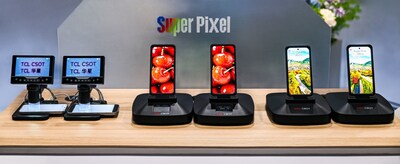
TCL CSOT is redefining next-generation FMM OLED performance with Super Pixel technology, which delivers a powerful trifecta of benefits:
TCL CSOT is showcasing a suite of groundbreaking Super Pixel mobile displays, each designed to push the boundaries of clarity, efficiency, and refresh performance.
IJP OLED: Superior Quality with Greater Flexibility
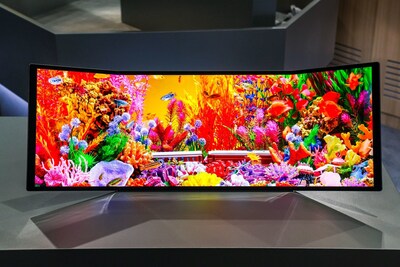
Building on TCL CSOT's decade-long leadership in IJP OLED and its construction of the world's first 8.6-generation IJP OLED production line (t8), the company is showcasing how IJP OLED technology is transforming the industry with significant advantages in manufacturing and performance. TCL CSOT's pixel innovation in this area delivers:
TCL CSOT is showcasing this innovation through the World's First Foldable & Portable IJP OLED Monitor Display (28"). Featuring a revolutionary tri-fold design, it transforms a compact 16-inch device into an expansive 28-inch ultra-wide screen, demonstrating IJP OLED's unique capability to enable flexible, high-performance designs that expand the boundaries of display applications.
LCD Innovation: Advancing with RGBC Four-Color Technology

TCL CSOT is advancing LCD technology for the large-screen domain by incorporating an innovative four-color (RGBC) pixel array.
This innovation is demonstrated in the World's Highest Image Quality WHVA Ultra LCD TV Display (85"), featuring a native RGBC four‑color pixel array that achieves 131% of the BT.2020 color gamut. Delivering true four‑color performance at the hardware level, it sets a new benchmark for LCD innovation with exceptionally vivid, natural, and clear images.
By continuously evolving its technology portfolio to meet diverse scenarios, TCL CSOT demonstrates its commitment to setting new standards in display innovation and ensuring that advanced display solutions enrich everyday life for users worldwide.
- End -
About TCL CSOT
Established in 2009, TCL China Star Optoelectronics Technology Co., Ltd. (TCL CSOT) is a leading global innovator in display technologies. Its LCD, OLED, and MLED solutions power applications across TVs, smartphones, tablets, laptops, monitors, automotive systems, VR/XR, and commercial displays. With a clear strategic direction set by its advanced display technology brand APEX, TCL CSOT invests continuously and strategically in R&D, driven by a mission to amaze, protect and inspire all people through endlessly innovative display technology. As part of TCL's Worldwide Olympic Partnership, TCL CSOT is proud to deliver display solutions that elevate experiences on the global stage.
Photo - https://mma.prnewswire.com/media/2973724/WhatsApp_Image_2026_05_06_at_4_12_55_PM__1.jpg
Photo - https://mma.prnewswire.com/media/2973723/WhatsApp_Image_2026_05_06_at_4_12_55_PM.jpg
Photo - https://mma.prnewswire.com/media/2973722/WhatsApp_Image_2026_05_06_at_4_12_54_PM.jpg
 View original content:https://www.prnewswire.co.uk/news-releases/tcl-csot-showcases-apex-pixel-full-path-innovation-across-advanced-displays-at-sid-display-week-2026-302764114.html

Im Streit um die Behandlung sogenannter Heavy User im Mobilfunk hat das nordrhein-westfälische Oberverwaltungsgericht (OVG) die Bundesnetzagentur vorläufig in die Schranken gewiesen. Die Bonner Aufsichtsbehörde hatte einem bundesweit tätigen Mobilfunkanbieter untersagt, Kunden mit unbegrenztem oder sehr großem Datenvolumen bei überlasteten Funkzellen mit geringerer Priorität zu bedienen. Diese Form der sogenannten Depriorisierung darf nach der einstweiligen OVG-Entscheidung vorerst weiter angewendet werden. Der Beschluss im Eilverfahren ist nicht anfechtbar.
Nach Auffassung des 13. Senats ist derzeit offen, ob die entsprechende Vertragsklausel des Anbieters mit europäischem Recht vereinbar ist. Im Kern geht es um die Frage, ob eine nachrangige Behandlung von Vielnutzern eine nicht gerechtfertigte Ungleichbehandlung von Kunden darstellt. Bevor in der Hauptsache entschieden wird, will das OVG Münster den Europäischen Gerichtshof (EuGH) um eine Vorabentscheidung bitten. Damit wird der Konflikt um Datenpriorisierung und Netzmanagement auf die europäische Ebene verlagert.
Gegenstand des Verfahrens ist insbesondere, ob der Datentransport datenintensiver Anwendungen wie hochauflösendem Videostreaming während einer Netzüberlastung eingeschränkt oder verlangsamt werden darf. Der betroffene Mobilfunkanbieter sieht dies in seinen Allgemeinen Geschäftsbedingungen vor, um Kapazitäten in ausgelasteten Funkzellen zu steuern. Die Bundesnetzagentur hatte angeordnet, dass diese Klausel nicht umgesetzt werden darf und damit faktisch einen Riegel vor entsprechende Maßnahmen gegen Heavy User geschoben.
In der Vorinstanz hatte sich die Bundesnetzagentur noch durchgesetzt: Das Verwaltungsgericht Köln hatte die Position der Behörde bestätigt. Das OVG änderte diese Entscheidung nun (Az. 13 B 1232/25) und gab dem Anbieter im Eilverfahren Recht. Mit der geplanten Vorlage an den EuGH dürfte der Fall Signalwirkung für die Auslegung europäischer Vorgaben zur Gleichbehandlung von Internetverkehr und zu den Spielräumen der Netzbetreiber beim Umgang mit stark belasteten Mobilfunkzellen entfalten.