SEOUL, South Korea, April 30, 2026 /PRNewswire/ -- Hyundai Motor Group (the Group) today unveiled Pleos Connect, a next-generation in-vehicle infotainment system designed to fundamentally transform the customer mobility experience.
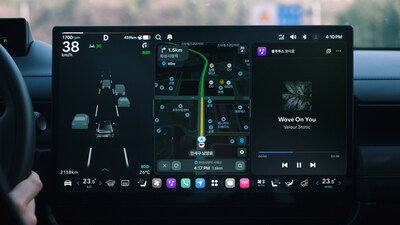
As the first major step in the Group's transformation into a software-centric mobility leader, Pleos Connect is built on three core development pillars—intuitiveness, safety, and openness—to combine a mobile-friendly user environment with advanced artificial intelligence (AI), creating a highly scalable and intuitive platform. The system will receive continuous feature and performance enhancements via over-the-air (OTA) software updates.
The system will debut on the Group's new vehicles later this year in Korea. The Group aims to equip approximately 20 million Hyundai, Kia and Genesis vehicles with Pleos Connect by 2030, reinforcing its leadership in future mobility solutions.
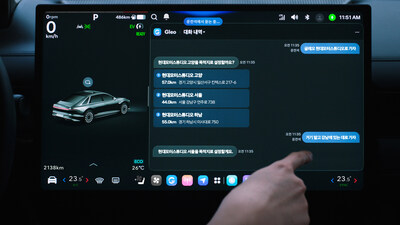
The Pleos Connect cockpit features two main displays:
Driver safety is enhanced through the physical buttons on the steering wheel and below the Large Central Screen, allowing quick access to key controls without using the touchscreen. In addition, a three‑finger gesture allows drivers to easily reposition app windows or instantly close unnecessary apps, supporting safer and more convenient interaction with in-vehicle applications.
At the heart of Pleos Connect is Gleo AI, an advanced voice assistant built on a large language model (LLM). The system is scheduled to be linked with a variety of application services, enabling customers to seamlessly use a wide range of app functions with voice commands alone.
More information about Hyundai Motor Group can be found at: http://www.hyundaimotorgroup.com or Newsroom: Media Hub by Hyundai, Kia Global Newsroom, Genesis Newsroom
Photo - https://mma.prnewswire.com/media/2970125/Image_1.jpg
Photo - https://mma.prnewswire.com/media/2970126/Image_2.jpg
PDF - https://mma.prnewswire.com/media/2970127/Press_Release__Hyundai_Motor_Group_Pleos_Connect_Next_Generation_Infotainment_System_vF_wire.pdf
 View original content to download multimedia:https://www.prnewswire.co.uk/news-releases/hyundai-motor-group-redefines-in-vehicle-experience-with-pleos-connect-next-generation-infotainment-system-302758637.html

Quantencomputing entwickelt sich laut einer neuen Analyse von McKinsey & Company vom reinen Forschungsfeld zu einem eigenständigen Wirtschaftszweig. Der „Quantum Technology Monitor 2026“ der Unternehmensberatung verortet das Jahr 2026 als Wendepunkt, an dem Quantenrechner für Unternehmen strategisch relevant werden. Im Mittelpunkt steht nicht mehr nur die technische Machbarkeit, sondern die Frage, welche Firmen jetzt Fähigkeiten und Partnerschaften aufbauen, um sich mit Hilfe der Technologie einen Vorsprung im Wettbewerb zu sichern.
Die Dynamik spiegelt sich in den Finanzierungszahlen wider: Weltweite Investitionen in Start-ups für Quantentechnologien haben sich binnen eines Jahres mehr als verzehnfacht und summierten sich 2025 auf ein Rekordvolumen von 12,6 Milliarden US‑Dollar. Parallel dazu überschritten die globalen Umsätze von Quantencomputing-Unternehmen erstmals die Marke von einer Milliarde Dollar. Damit signalisiert der Markt, dass erste kommerzielle Anwendungen über Pilotprojekte hinausgehen und neue Geschäftsmodelle entstehen.
Technologisch unterscheiden sich Quantencomputer grundlegend von herkömmlichen Systemen. Statt mit Bits, die entweder 0 oder 1 darstellen, arbeiten sie mit Qubits, die dank Superposition Zustände von 0 und 1 gleichzeitig einnehmen können. Hinzu kommt Verschränkung: Qubits können miteinander verbunden sein, unabhängig von ihrer räumlichen Distanz. Diese Eigenschaften ermöglichen es Quantenrechnern, bestimmte Aufgaben wie die Mustererkennung oder die Simulation hochkomplexer Systeme deutlich schneller zu bewältigen als klassische Rechner – mit besonderem Potenzial in Kryptographie, Materialforschung und Künstlicher Intelligenz.
Der McKinsey-Bericht deutet auf einen strukturellen Wandel hin: Quantencomputing ist in den Vorstandsetagen großer Konzerne angekommen. Für Unternehmen wird es zur Managementfrage, wie sie den Zugang zu entsprechender Hardware – häufig über Cloud-Lösungen – sichern, geeignete Software-Stacks aufbauen und zugleich das notwendige Fachwissen ins Haus holen. Der Bericht verweist auf einen sich beschleunigenden internationalen Wettlauf zwischen Europa, den USA und China, der Chancen für etablierte Technologiekonzerne ebenso wie für spezialisierte Newcomer eröffnet. Wer frühzeitig ein Ökosystem aus Partnern und Anwendungen etabliert, dürfte laut Studie die besten Voraussetzungen haben, vom erwarteten Wachstum der Branche zu profitieren.