WEST PALM BEACH, Fla., June 11, 2026 /PRNewswire/ -- Elliott Investment Management L.P. ("Elliott"), which manages funds that together hold an investment of well over A$1 billion in Northern Star Resources Ltd ("Northern Star" or the "Company"), today issued the following statement in response to the letter to shareholders published by the Company's Board of Directors:

This week's letter from Northern Star's Board has validated Elliott's investment thesis. The Board has formally acknowledged the Company's underperformance, disclosed it has received multiple inbound approaches from potential acquirers over the past year, and confirmed that its own financial advisers have modeled structural alternatives, including a spin-off of assets. However, the Board's letter indicates that it does not understand the magnitude of change required to win back shareholders' trust, starting with significantly strengthening the Board itself.
Whatever path Northern Star takes next, its Board must be equipped to oversee the process, and the market must have confidence in its credibility and rigor. The current Board has presided over years of operational missteps, poor performance and an overdue CEO departure with no clear succession plan in place. And the Board's latest letter acknowledges that, despite receiving multiple expressions of interest from buyers over the past year, those discussions did not proceed, and the Board does not believe now is the right time to embark on a strategic review process. Over that same year, Northern Star underperformed the gold miners index by approximately 70 percentage points – starkly illustrating the value these strategic alternatives might have unlocked.
The Board cannot simultaneously acknowledge inbound corporate interest, confirm its advisers have modeled structural options, and then decline to run any kind of formal process. The case for a strategic review is now more apparent than it was before the Board published its letter.
We believe Northern Star must act immediately to restore shareholder value. First, the Board must be substantially strengthened – its experience and skills enhanced well beyond the addition of a single, handpicked director – so that it can serve as an effective and credible steward of the Company through this transition. Second, this strengthened Board must launch a formal strategic review to evaluate all alternatives, conducted alongside the search for a world-class CEO and the development of a standalone turnaround plan. No options should be taken off the table, and no outcome should be prejudged – by Elliott or by Northern Star's Board. This crucial work must begin now.
We agree that Northern Star has world-class assets, among the most important of which is its highly skilled, dedicated workforce. Elliott is committed to working with Northern Star to ensure it realizes its full potential for its shareholders, its workers and all others who depend on its success.
Elliott's full perspectives on Northern Star and its unique value-creation opportunity can be accessed at ElliottLetters.com/NST
About Elliott
Elliott Investment Management L.P. (together with its affiliates, "Elliott") manages approximately $79.8 billion of assets as of December 31, 2025. Founded in 1977, it is one of the oldest funds under continuous management. The Elliott funds' investors include pension plans, sovereign wealth funds, endowments, foundations, funds-of-funds, high net worth individuals and families, and employees of the firm.
Media Contacts:
London
Stijn van de Grampel
Elliott Advisors (UK) Limited
T: +44 20 3009 1061
svdgrampel@elliottadvisors.co.uk
New York
Stephen Spruiell
Elliott Investment Management L.P.
T: +1 (212) 478-2017
sspruiell@elliottmgmt.com
Sydney
Annabel Clunies-Ross
Hanbury Strategy
T: +61 428 295 517
nst@hanburystrategy.com
1 Total shareholder return from May 30, 2025 through June 1, 2026, the last trading day prior to initial media reports of Elliott's investment in Northern Star, as measured against the VanEck Gold Miners ETF (GDX).
 View original content to download multimedia:https://www.prnewswire.co.uk/news-releases/elliott-management-statement-on-northern-star-resources-ltd-302797308.html

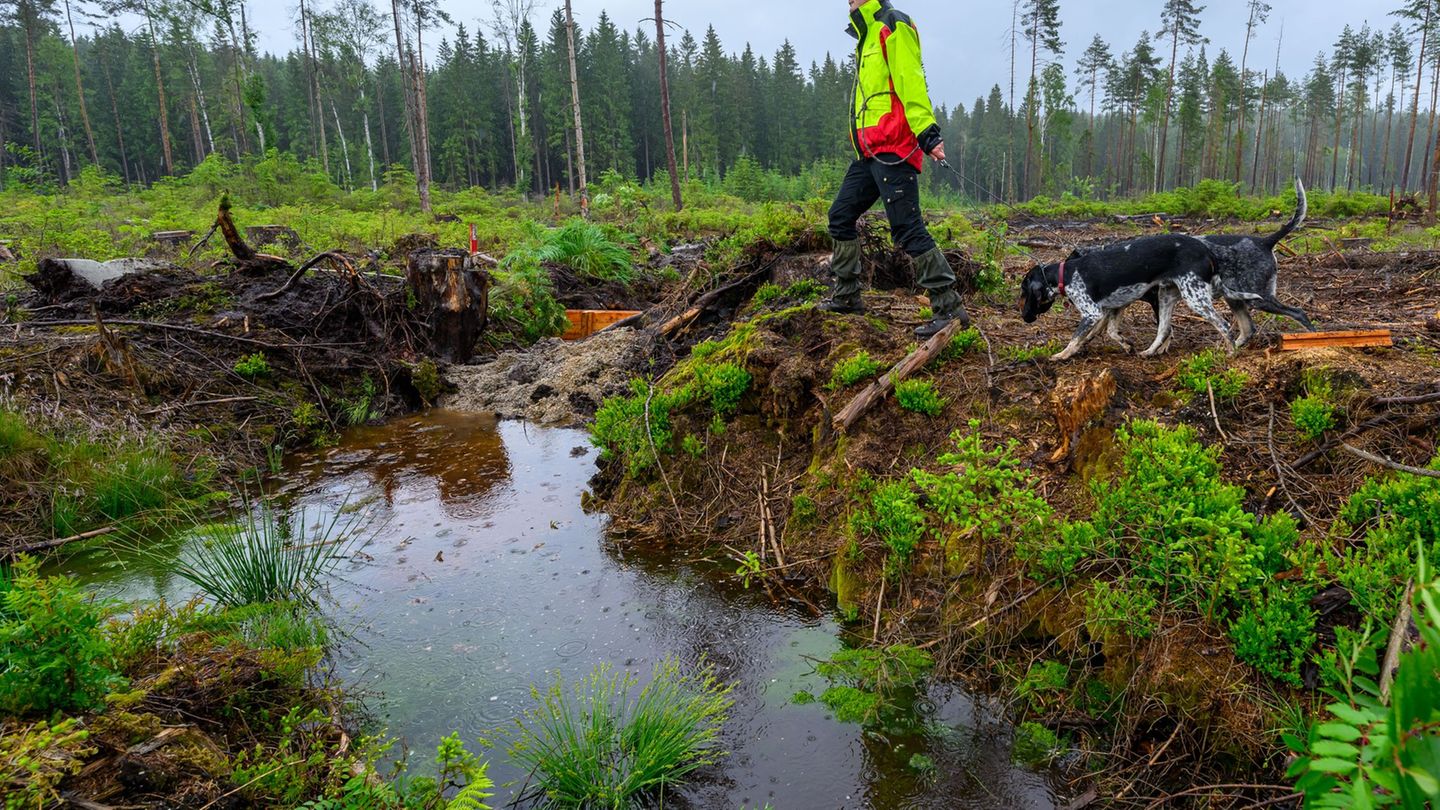
Moore gelten als stille Schwergewichte des Klimaschutzes: Sie speichern langfristig CO2 und bieten seltenen Tier- und Pflanzenarten Rückzugsräume. In Sachsen sind solche Ökosysteme jedoch zur Ausnahme geworden. Nach Angaben des Landesamts für Umwelt, Landwirtschaft und Geologie existieren rund 47.000 Hektar Moore und organische Nassstandorte, was etwa 2,5 Prozent der Landesfläche entspricht. Nur ein Bruchteil davon gilt allerdings noch als naturnahes Moorökosystem. Viele Flächen wurden in der Vergangenheit entwässert, um sie für Land- und Forstwirtschaft nutzbar zu machen; allein gut 11.000 Hektar Moorböden werden heute als Grün- oder Ackerland genutzt.
Die Staatsregierung versucht, daraus politische Konsequenzen zu ziehen. Im Koalitionsvertrag haben CDU und SPD vereinbart, ein Konzept für die sächsischen Moorflächen zu erarbeiten. Ziel ist es, die Reduktion von Netto-CO2-Emissionen, Ökosystemleistungen, Biodiversitätsschutz und landwirtschaftliche Nutzung in Einklang zu bringen. Für Eigentümer und Nutzer der Flächen soll zugleich eine „dauerhafte wirtschaftliche Perspektive“ entstehen. Nach Auskunft des Umweltministeriums befindet sich das Papier auf der Zielgeraden und soll Ende des Jahres veröffentlicht werden. Es ist als Handlungsleitfaden mit fachlich empfehlendem Charakter vorgesehen; konkrete Flächenziele sollen darin jedoch nicht festgeschrieben werden.
Umweltverbände halten den bisherigen Ansatz für zu zögerlich. Der sächsische Landesverband des BUND kritisiert, der Moorschutz gehe bislang nicht über einzelne Modellprojekte hinaus. Nötig sei, einen wesentlichen Teil der Flächen wiederzuvernässen – sowohl in den Lausitzer Niedermooren als auch in den erzgebirgischen Hochmooren, fordert Landesvorsitzender Felix Ekardt. Das Landesamt für Umwelt verweist darauf, dass sich der Zustand entwässerter Flächen generell weiter verschlechtere, während dort, wo Wiedervernässungsmaßnahmen eingeleitet wurden, Anzeichen einer Stabilisierung zu beobachten seien.
Konfliktfrei ist die Revitalisierung der Moorstandorte nicht. Laut Umweltministerium bremsen vor allem komplexe Eigentumsverhältnisse, die Finanzierung umfangreicher Projekte und Nutzungskonflikte mit Landwirtschaft und Trinkwasserschutz den Fortschritt. Aktuell laufen Renaturierungs- und Schutzvorhaben unter anderem in der Mothäuser Heide im Erzgebirge und im Dubringer Moor im Landkreis Bautzen. Parallel bereitet Sachsen mehrere Anträge im Rahmen der Bundesförderrichtlinie „1.000 Moore“ vor, um zusätzliche Mittel für neue Projekte einzuwerben. Mit der seit diesem Jahr angebotenen Beratungsstelle „MoSa – Moorbodenschutz in den Moorregionen Sachsens“ versucht das Landesamt zudem, Akteure vor Ort fachlich zu unterstützen und weitere Flächen für den Moorschutz zu gewinnen.