SHANGHAI, April 17, 2026 /PRNewswire/ -- AGIBOT today outlined its long-term strategic vision for embodied intelligence at the AGIBOT Partner Conference (APC) 2026, declaring 2026 as the first year of large-scale commercial deployment of physical AI systems delivering measurable productivity gains.
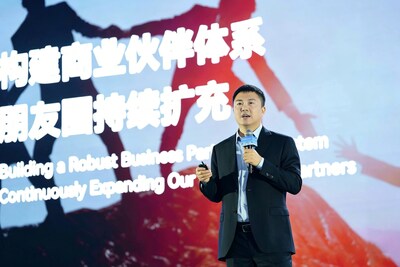
Building on three years of rapid evolution, from R&D to mass production to commercialization, AGIBOT highlighted a fundamental industry transition: artificial intelligence is moving beyond digital cognition into real-world execution. As embodied systems begin to operate reliably in physical environments, the industry is entering a critical phase where scalable deployment and tangible productivity value are becoming achievable at scale. Against this backdrop, AGIBOT is positioning itself as a key architect of the emerging Physical AI ecosystem.
"The industry is moving from proving what robots can do, to proving what value they can consistently deliver at scale," said Edward Deng, Founder, Chairman and CEO of AGIBOT. "At AGIBOT, we focus on making embodied intelligence deployable, combining motion, interaction, and manipulation intelligence into one system that can operate under real-world constraints. Our goal is not just to build capable robotic machines, but to turn them into reliable units of productivity that can be scaled across industries."
A Full-Series Portfolio Built on a Unified Physical Intelligence Architecture
At APC 2026, AGIBOT unveiled its latest technological architecture at APC 2026, positioning itself as the only company to offer a full-series, full-scenario lineup spanning humanoids, wheeled platforms, and multi-form robots across different sizes and applications.
At the core of this portfolio is AGIBOT's "One Robotic Body with Three Intelligences" framework, an engineering-ready paradigm that integrates motion, interaction, and operation intelligence into a unified system. Within this architecture, the robotic body serves not only as the physical carrier of intelligence, but also as the critical interface to the real world, where perception, decision-making, and execution must operate under real physical constraints such as force, precision, timing, and safety. This tight coupling between intelligence and embodiment enables robots to move beyond isolated capabilities toward full-domain generalization in complex environments.
Supported by one of the most comprehensive full-stack technology systems in embodied AI, spanning both "brain" and "body", and reinforced by industry-leading mass production capabilities, AGIBOT continues to iterate its product lineup while systematically scaling deployment across increasingly complex real-world scenarios.
The XYZ Framework for Embodied Intelligence
At APC 2026, AGIBOT introduced a clear XYZ-curve framework to define the development trajectory of the embodied intelligence industry.
With 2026 declared as "Deployment Year One," AGIBOT is formally transitioning the industry into the era of measurable productivity. This milestone is underscored by the company's announcement of the rollout of its 10,000th robot as of March 2026, reflecting both manufacturing scale and accelerating real-world adoption. Combined with rapid revenue growth, AGIBOT has established itself as one of the fastest-scaling embodied AI companies globally.
Seven Standardized Solutions Driving Real-World Adoption
To accelerate commercialization, AGIBOT introduced seven standardized productivity solutions targeting high-value industry scenarios: loading and unloading, industrial handling, logistics sorting, guidance and retail assistance, retail service stations, security patrol, and industrial & commercial cleaning. Each solution integrates hardware, AI models, and data systems into a unified, repeatable deployment package, enabling faster rollout cycles and lower integration complexity. Unlike traditional robotics deployments that rely heavily on customization, AGIBOT's approach emphasizes modularity, scalability, and measurable ROI.
Backed by real-world deployments across manufacturing, logistics, retail, and public infrastructure, these solutions have demonstrated quantifiable impact, from improved efficiency and precision to reduced labor costs and enhanced service capabilities. This solution-driven model marks a critical step in transitioning embodied AI from pilot projects to scalable productivity infrastructure.
Launching AIMA, A Full-Stack Open Architecture for Embodied AI
Reinforcing its role as an ecosystem builder, AGIBOT also announced the launch of AIMA (AI Machine Architecture), the industry's first complete open technology system for embodied intelligence. Designed as a "1+3+X" architecture, AIMA consists of a unified robot operating system (Link-U OS), three core development platforms - LinkCraft for motion creation, LinkSoul for interaction design, and Genie Studio for task development - and an extensible ecosystem layer supporting a wide range of applications. The "X" represents the AGIBOT Embodied Agent Framework, enabling deployment across commercial, industrial, and home scenarios, while supporting developers and ecosystem partners.
This full-stack architecture provides an end-to-end toolchain, from low-level system control to high-level application development, significantly reducing the complexity and cost of building embodied AI solutions. Through continuous open-sourcing and platform expansion, AGIBOT has already attracted a rapidly growing global community of developers and partners, laying the foundation for scalable ecosystem innovation.
Building a Global Ecosystem for the Next Phase of Productivity
Over the next five years, AGIBOT plans to invest more than RMB 2 billion to expand its ecosystem, working alongside leading universities, industry partners, and developers to build a globally competitive embodied AI infrastructure. AGIBOT also aims to support thousands of partners and cultivate a large-scale developer community, driving both technological innovation and commercial adoption. Looking toward 2030, AGIBOT envisions embodied intelligence reaching the stage of widespread adoption, unlocking trillion-scale market potential and enabling robots to become a fundamental layer of productivity across industries.
By aligning technology, ecosystem, and commercial deployment, AGIBOT aims to usher in a new era of embodied AI-driven productivity.
For more information, please visit AGIBOT at AGIBOT.com and follow AGIBOT on:
https://www.facebook.com/AGIBOT.zhiyuan
https://x.com/AGIBOT_zhiyuan
https://www.instagram.com/AGIBOT_
https://www.tiktok.com/@agibot_
https://www.youtube.com/@AGIBOT-robot
About AGIBOT
AGIBOT is dedicated to driving innovation through the integration of AI and robotics, creating world-leading general-purpose embodied robot products and an application ecosystem. Built on the foundation of the robotic body and powered by the fusion of interaction, manipulation, and locomotion intelligence - "1 Robotic Body, 3 Intelligence" - AGIBOT is a leading robotics company in the industry to deliver a complete product portfolio and deploy across all major application scenarios. In March 2026, AGIBOT announced the rollout of its 10,000th robot, marking a major milestone in large-scale production and deployment.
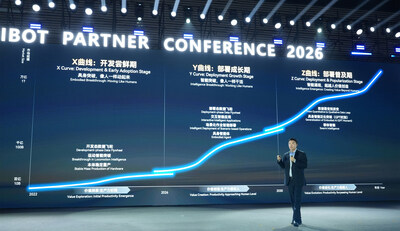
Photo - https://mma.prnewswire.com/media/2959421/image1.jpg
Photo - https://mma.prnewswire.com/media/2959422/image2.jpg
 View original content:https://www.prnewswire.co.uk/news-releases/agibot-declares-2026-deployment-year-one--at-apc-2026-accelerating-the-era-of-embodied-ai-productivity-302746181.html

Porsche startet mit einem deutlichen Dämpfer ins Jahr, hält aber an seinen Zielen fest. Der Sport- und Geländewagenbauer setzte im ersten Quartal rund 8,4 Milliarden Euro um, ein Rückgang von etwa 5 Prozent im Vergleich zum Vorjahr. Das operative Konzernergebnis sank um gut ein Fünftel auf 595 Millionen Euro, die operative Umsatzrendite ging von 8,6 auf 7,1 Prozent zurück. Unter dem Strich fiel der Gewinn nach Steuern um rund ein Viertel auf 391 Millionen Euro. An der Börse kamen die Zahlen dennoch vergleichsweise gut an: In einem schwachen Gesamtmarkt legte die Aktie um 1,6 Prozent auf 41,17 Euro zu.
Analysten hatten im Vorfeld bereits mit einem Gewinnrückgang gerechnet, unter anderem wegen des anhaltend schwierigen Umfelds in China und höherer Belastungen in den USA. Im Konsens war von einem Ergebnisminus von etwa 25 Prozent und einer niedrigeren Rendite ausgegangen worden. Citi-Analyst Harald Henrikse hob hervor, dass sich die operative Marge im Kerngeschäft ohne Sonderkosten bei rund 8 Prozent stabilisiere – angesichts des derzeitigen Absatzniveaus sei das bemerkenswert und deute darauf hin, dass Porsche die Talsohle bei der Profitabilität erreicht haben könnte. Jefferies verwies darauf, dass das operative Ergebnis rund sieben Prozent über den Markterwartungen gelegen habe, gestützt durch das Modellmix und eine disziplinierte Preisstrategie.
Das Management führt den Rückgang der Auslieferungen – minus 14,7 Prozent auf 60.991 Fahrzeuge – auf eine gezielte Volumensteuerung zurück. Die Strategie "Value over Volume" priorisiert Margen über Stückzahlen und wird durch eine stärkere Gewichtung renditestarker Modelle wie GT-Varianten untermauert. Gleichzeitig lasten Sondereffekte auf den Zahlen: Finanzchef Jochen Breckner bezifferte die im Quartal angefallenen Sonderkosten für den laufenden Strategiewechsel auf rund 100 Millionen Euro, für das Gesamtjahr werden 800 bis 900 Millionen Euro erwartet. Zusätzlich schlagen höhere US-Importzölle mit etwa 200 Millionen Euro allein im ersten Quartal zu Buche.
Vor diesem Hintergrund bestätigt Porsche seinen Ausblick für das Gesamtjahr. Der Konzern rechnet weiterhin mit einem Umsatz zwischen 35 und 36 Milliarden Euro und einer operativen Umsatzrendite von 5,5 bis 7,5 Prozent. Die derzeitige Marge von 7,1 Prozent liegt damit am oberen Ende der Spanne, dürfte aber im weiteren Jahresverlauf stärker von Sonderkosten belastet werden. Der Umbau unter dem neuen Vorstandschef Michael Leiters, der das Unternehmen nach einem massiven Ergebniseinbruch im vergangenen Jahr in den Krisenmodus geführt hat, könnte bereits vor dem für Oktober angesetzten Kapitalmarkttag weitere strategische Entscheidungen bringen. Mögliche Auswirkungen des Iran-Konflikts sind in der Prognose bislang nicht berücksichtigt.



